Clinical Nutrition Quick Answer: Feeling persistently cold after childbirth is rarely "just tiredness." It commonly points to depleted iron stores (ferritin), suboptimal thyroid T4-to-T3 conversion cofactors (iodine, selenium, zinc, vitamin D), or chronic postpartum under-fueling. Speak with your doctor about checking a full thyroid panel plus ferritin, and prioritize warm, protein- and mineral-rich meals.
Feeling cold postpartum is one of the most common — and most overlooked — symptoms of postnatal depletion. If you're always cold after pregnancy, wrapped in blankets in July while your partner runs the AC, it's almost certainly not "just your hormones." Specific nutrient depletions — particularly iron, iodine, selenium, zinc, and vitamin D — directly impair your body's ability to generate and regulate heat, and standard postpartum labs almost never check for them properly.
It's 2am. The baby finally went down. You shuffle to the kitchen for water, and despite the fact that it's 74 degrees in your house, you are freezing. Not a little chilly. Bone-cold. The kind of cold that makes you wonder if something is genuinely wrong with you.
Your partner doesn't feel it. Your mother says she doesn't remember feeling this way. Your OB cleared you at your six-week check and said everything looked "fine." And yet here you are, in a hoodie and fuzzy socks in the middle of summer, feeling like your thermostat is permanently broken.
You're not imagining it. You're not being dramatic. And you are absolutely not alone.
In functional postpartum nutrition practice, feeling cold postpartum — what we clinically call postpartum cold intolerance — is one of the most consistent and persistent complaints I hear. It shows up in new mothers six weeks out and in mothers who gave birth five years ago and still haven't felt warm since.
What almost no one tells you — and what your standard six-week bloodwork almost certainly missed — is that this symptom has a very specific, very fixable set of nutrient causes. Let's talk about all of them.
The Science: Why Your Body Temperature Regulation Changes After Birth
Your body runs its internal furnace through a complex interplay of thyroid hormones, iron-dependent oxygen transport, mitochondrial function, and adrenal output. Pregnancy and birth — particularly if you experienced any blood loss, breastfeeding, sleep deprivation, or nutritional depletion during pregnancy — can compromise every single one of these systems simultaneously.
Here's the key thing to understand: your body prioritizes survival over comfort. When nutrients are scarce postpartum, your physiology makes triage decisions. Milk production, wound healing, and basic organ function get resources first. Temperature regulation? That goes to the bottom of the list.
The result is a body that genuinely struggles to generate and maintain normal heat — not because anything is catastrophically wrong, but because you are running on empty in very specific ways that standard labs are not designed to catch.
A 2016 study published in the Journal of Midwifery & Women's Health found that up to 50% of women experience some form of nutrient depletion in the first year postpartum, with iron, iodine, and vitamin D being the most consistently low. These are not rare deficiencies. They are practically the norm — and they have a direct, measurable impact on how cold you feel.
The Main Nutrient Causes of Postpartum Cold Intolerance
1. Iron Deficiency: The Most Common Reason You're Always Cold After Pregnancy
Iron deficiency is the single most common nutritional deficiency worldwide, and postpartum women are among the highest-risk populations. An estimated 27% of women are iron-deficient within 6 months of delivery, according to the WHO — and that number climbs significantly when you factor in women who experienced hemorrhage, had multiples, or were iron-depleted during pregnancy.
Here's why iron makes you cold: your red blood cells use iron to carry oxygen to your tissues. Oxygen is the fuel your cells burn to generate heat. When iron is low, your cells are essentially trying to start a fire without enough oxygen — nothing really ignites the way it should. You feel cold, tired, foggy, and breathless on exertion.
The frustrating part? Many women are told their iron is "normal" when it isn't optimal. Standard labs check hemoglobin and hematocrit, which only catch full anemia. Ferritin — your stored iron — can be critically low long before anemia appears, and it's rarely included in routine postpartum panels.
The fix: Request a full iron panel, not just hemoglobin. You want ferritin, serum iron, TIBC, and transferrin saturation. Work with a practitioner on supplementation — heme iron or iron bisglycinate tends to be gentler on the stomach. Pair with vitamin C and avoid calcium within two hours of dosing.
👉 Read more about iron deficiency after pregnancy and how to replete it properly.
2. Thyroid Dysfunction: The Postpartum Thyroid Problem No One Mentions
Postpartum thyroiditis affects approximately 5–10% of women in the first year after birth, according to the American Thyroid Association. But subclinical hypothyroidism — where thyroid hormones are technically within "normal" range but not functioning optimally — is far more common and far less frequently diagnosed.
Your thyroid is essentially your body's thermostat. It produces T4 (inactive) and T3 (active), which regulate your metabolic rate — including how efficiently you generate body heat. When thyroid function is even mildly suppressed, one of the first symptoms is persistent cold sensitivity. Other hallmarks include fatigue, hair loss, constipation, brain fog, and low mood.
The critical issue: standard thyroid testing only checks TSH, which is a signaling hormone, not the thyroid hormones themselves. TSH can appear normal while T3 — the active hormone — is low. Additionally, postpartum thyroiditis often causes a hyperthyroid phase followed by a hypothyroid phase, meaning if you happened to be tested at the wrong time, you got a completely misleading result.
The fix: Request a complete thyroid panel: TSH, free T3, free T4, reverse T3, TPO antibodies, and TgAb. Optimal TSH for most postpartum women is between 1.0–2.5 mIU/L, not the lab reference range of up to 4.5 or even 5.0. Two nutrients your thyroid cannot function without — iodine and selenium — are addressed below.
👉 Explore postpartum thyroid symptoms and what to do when your labs come back "normal".
3. Iodine and Selenium Deficiency: The Thyroid's Missing Building Blocks
Even if your thyroid itself is structurally fine, it cannot produce hormones without iodine, and it cannot convert T4 into the active T3 your cells actually use without selenium.
Iodine requirements increase by approximately 50% during pregnancy and lactation, from the standard 150 mcg/day to 220–290 mcg/day. Many prenatal vitamins contain little to no iodine — a 2017 study in Nutrients found that of 60 widely sold prenatal vitamins, fewer than half contained the recommended amount of iodine.
Selenium is equally critical and equally neglected. Most women of reproductive age are marginally low in selenium due to soil depletion in the food supply. Selenium deficiency directly impairs the conversion of T4 to T3, meaning even if your thyroid is producing enough T4, your body can't activate it — and you feel cold, tired, and foggy as a result.
The fix:
- Iodine: Aim for 250 mcg/day while breastfeeding. Sources include kelp, seaweed, dairy, and eggs. Ensure your prenatal or postnatal supplement contains potassium iodide.
- Selenium: The therapeutic range is 100–200 mcg/day. Two to three Brazil nuts daily can provide this, or supplement with selenium selenomethionine.
👉 Learn more about how cold sensitivity postpartum connects to thyroid function and nutrient depletion.
4. Vitamin D Deficiency: More Than Just Bone Health
Vitamin D deficiency is extraordinarily common postpartum — studies suggest up to 76% of postpartum women have insufficient vitamin D levels. This isn't just about bones. Vitamin D receptors are found in virtually every tissue in the body, including muscle and fat cells, which are your primary heat-generating tissues.
Low vitamin D impairs mitochondrial function — meaning your cells are less efficient at producing energy and heat. It also suppresses thyroid hormone sensitivity, compounding the cold intolerance caused by any underlying thyroid issues.
Vitamin D blood levels: There is no established universal postpartum target of 50–80 ng/mL. NIH considers 20 ng/mL or more sufficient for most people and notes potential adverse effects above 50 ng/mL. Discuss your result with a qualified healthcare professional. NIH vitamin D guidance.
Vitamin D supplements: A qualified healthcare professional should decide whether testing or supplementation is needed and select a dose for your circumstances. The adult upper intake limit, including during breastfeeding, is 4,000 IU daily from food, drinks, and supplements; higher treatment doses require medical supervision. NIH vitamin D guidance.
5. Zinc Deficiency: The Overlooked Hormone Regulator
Zinc is required for the production and activation of thyroid hormones, for proper immune function, and for the activity of hundreds of enzymes involved in energy metabolism. It depletes rapidly during pregnancy and is further depleted through breastfeeding.
Signs of zinc deficiency postpartum include cold intolerance, increased susceptibility to illness, slow wound healing, hair loss, and altered taste and smell. The catch: serum zinc levels are a poor marker of true zinc status, because the body tightly regulates blood zinc even as tissue stores decline.
The fix: Rather than relying solely on labs, consider a therapeutic trial of zinc. 15–25 mg/day of zinc bisglycinate or zinc picolinate is a reasonable postpartum dose. Always take zinc with food (never on an empty stomach) and ensure you're not taking it at the same time as iron supplementation, as they compete for absorption. Balance with copper — long-term zinc supplementation requires approximately 1–2 mg copper to prevent deficiency.
Which Labs to Request — And What "Optimal" Actually Means
This is the section I wish every mother could hand to her doctor. When you go in and ask why you're always cold after pregnancy, here is exactly what to request:
| Lab Test | Lab Reference Range | Optimal Postpartum Range |
|---|---|---|
| Ferritin | 12–150 ng/mL | 50–100 ng/mL |
| Serum Iron | 60–170 mcg/dL | 80–130 mcg/dL |
| Transferrin Saturation | 20–55% | 25–45% |
| TSH | 0.4–4.5 mIU/L | 1.0–2.5 mIU/L |
| Free T3 | 2.3–4.2 pg/mL | 3.2–4.2 pg/mL |
| Free T4 | 0.8–1.8 ng/dL | 1.1–1.7 ng/dL |
| TPO Antibodies | <35 IU/mL | Negative |
| Vitamin D (25-OH) | Interpret with your healthcare professional | No universal postpartum target; see NIH guidance |
| Serum Zinc | 60–120 mcg/dL | 80–110 mcg/dL |
When requesting these labs: Be direct with your provider. You can say, "I've been experiencing persistent cold intolerance postpartum, and I'd like a comprehensive panel including ferritin, a full thyroid panel with antibodies, and vitamin D. I understand these aren't standard, but I'd like to rule out nutrient-based causes before we move forward."
If your provider refuses, you can order many of these through direct-to-consumer labs like Ulta Lab Tests or Request A Test, and bring the results to a functional medicine practitioner for interpretation.
When to See a Specialist
Please don't wait years the way many of my clients did. Seek evaluation sooner rather than later if:
- You are more than 3 months postpartum and persistently cold despite adequate sleep and eating
- You have additional symptoms — hair loss, extreme fatigue, brain fog, mood changes, heart palpitations, constipation, or unexplained weight changes
- Your labs have been checked but only included hemoglobin and TSH
- You had significant blood loss during delivery (>500ml for vaginal, >1000ml for cesarean)
- You are exclusively breastfeeding beyond 12 months without targeted nutritional support
- You had a twin or higher-order pregnancy
These are situations where the depletion is often deeper and requires more targeted, personalized intervention than even a well-designed self-guided approach can provide.
Your Recovery Action Plan: Week by Week
Week 1: Test, Don't Guess
- Call your OB, midwife, or primary care provider and request the full lab panel listed above
- Begin a food-first approach: prioritize iron-rich foods (grass-fed beef, lentils, leafy greens), iodine-rich foods (eggs, dairy, seaweed), and selenium-rich foods (Brazil nuts, tuna, sardines)
- Take the free postnatal depletion quiz to understand your personal risk profile
Week 2: Optimize Your Foundation
- Review your prenatal or postnatal vitamin — ensure it contains iodine (at least 150 mcg), folate (not folic acid), and selenium
- Review any vitamin D supplement and the total amount in your other products with your healthcare professional. NIH vitamin D guidance.
- Eat something warm, protein-rich, and mineral-dense within one hour of waking — blood sugar stability directly impacts thermoregulation
Weeks 3–4: Address Root Causes With Lab Guidance
- Receive and review your lab results — ideally with a functional medicine practitioner or a certified postnatal nutritionist who knows what "optimal" means
- Begin targeted supplementation based on your specific results
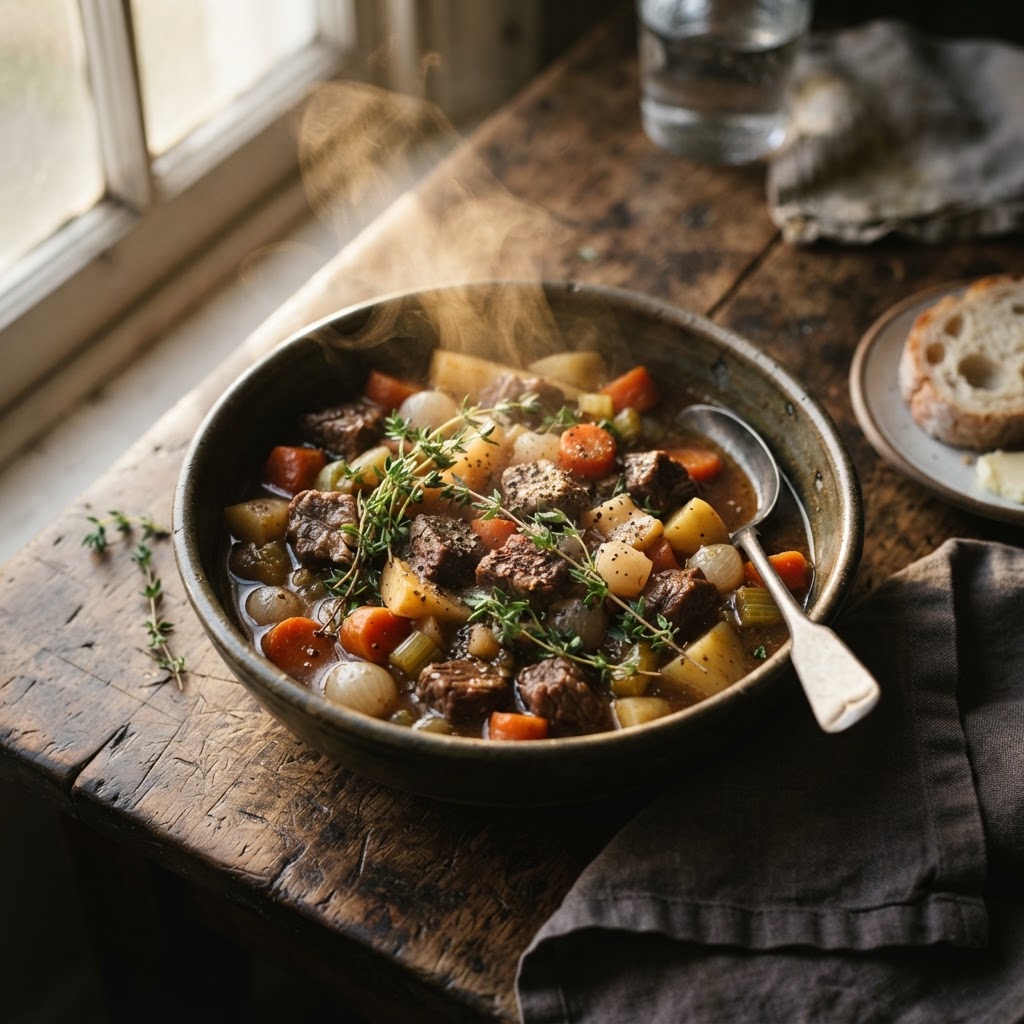
- Add warming, mineral-rich broths and slow-cooked meals — bone broth is a particularly efficient way to deliver minerals in a bioavailable form
Weeks 5–8: Track, Adjust, and Support Your Thyroid
- Note any improvements in cold tolerance, energy, and hair loss
- Retest ferritin and vitamin D at 8 weeks if you started therapeutic supplementation
- If thyroid antibodies were elevated, work with your practitioner on a gluten- and dairy-reduction trial (both have evidence for reducing TPO antibody levels in Hashimoto's)
- Continue prioritizing sleep consolidation — chronic sleep deprivation suppresses T3 conversion, even when all other nutrients are in range
The Empowering Truth About Feeling Cold Postpartum
Here is what I want you to hear clearly, in case no one has said it yet:
Your body is not broken. It is depleted.
Those are two very different things, and the distinction matters enormously — not just practically, but emotionally. A broken body is a hopeless body. A depleted body is a body that has been asking for specific things that it hasn't received yet, and will respond beautifully when it does.
The experience of being always cold after pregnancy is your physiology speaking precisely and honestly. It is telling you that something measurable — iron, iodine, thyroid hormones, vitamin D, selenium — is running too low to keep your internal furnace burning the way it should.
You are not aging poorly. You are not "just a mom now." You are not someone who has to be cold and exhausted forever. You are a mother whose body did something extraordinary, whose needs were almost certainly not fully met in the process, and who deserves the specific, targeted, evidence-based support to come back to herself.
She just needs her nutrients back.
If you're ready to stop guessing and start understanding exactly what your body needs, I'd love to connect. You can book a free 30-minute discovery call to talk through your symptoms, your labs, and what a personalized postpartum recovery plan might look like for you.
Because you shouldn't have to be cold forever — and you don't have to figure this out alone.
About Yarden Konki Yarden Konki is a Certified Functional Postpartum Nutritionist based in Los Angeles, working with mothers across the United States through virtual one-on-one nutrition counseling. With clinical nutrition practice of experience and postpartum mothers supported, she specializes in resolving postnatal depletion — including fatigue, cold intolerance, hair loss, and mood disruption — through targeted, evidence-based nutritional intervention.
This article is for educational purposes and does not constitute medical advice. Always consult with your healthcare provider before starting new supplements, especially while breastfeeding.
Why am I freezing cold at night postpartum without a fever?
Postpartum chills and cold intolerance often stem from rapid estrogen drops early after delivery, followed later by low ferritin (iron storage), under-eating while breastfeeding, or postpartum thyroiditis shifting into a hypothyroid phase.
Which blood tests should I ask my doctor about if I am always cold after pregnancy?
Alongside a standard CBC, ask your OB-GYN or primary care physician whether checking serum ferritin, TSH, free T4, free T3, thyroid antibodies, vitamin B12, and 25-OH vitamin D is appropriate for your symptoms.
Can breastfeeding make you feel cold all the time?
Yes. Producing breast milk requires roughly 400 to 500 extra calories per day plus significant iodine, iron, calcium, and fluids; when intake lags behind output, the body conserves energy by lowering peripheral warmth.
Clinical Evidence & Maternal Nutrition References
- NIH Office of Dietary Supplements: Maternal & Lactation Micronutrient Fact Sheets (Iron/Ferritin, B12, Vitamin D, Magnesium, Zinc, Choline & DHA).
- CDC Breastfeeding Guidelines: Maternal Diet & Micronutrient Supplementation in Postpartum Care.
- ACOG Postpartum Care Guidance: Optimizing Postpartum Care (ACOG Committee Opinion No. 736) — paired with Functional Feminine postnatal depletion support and the 2-minute Postnatal Depletion Quiz.