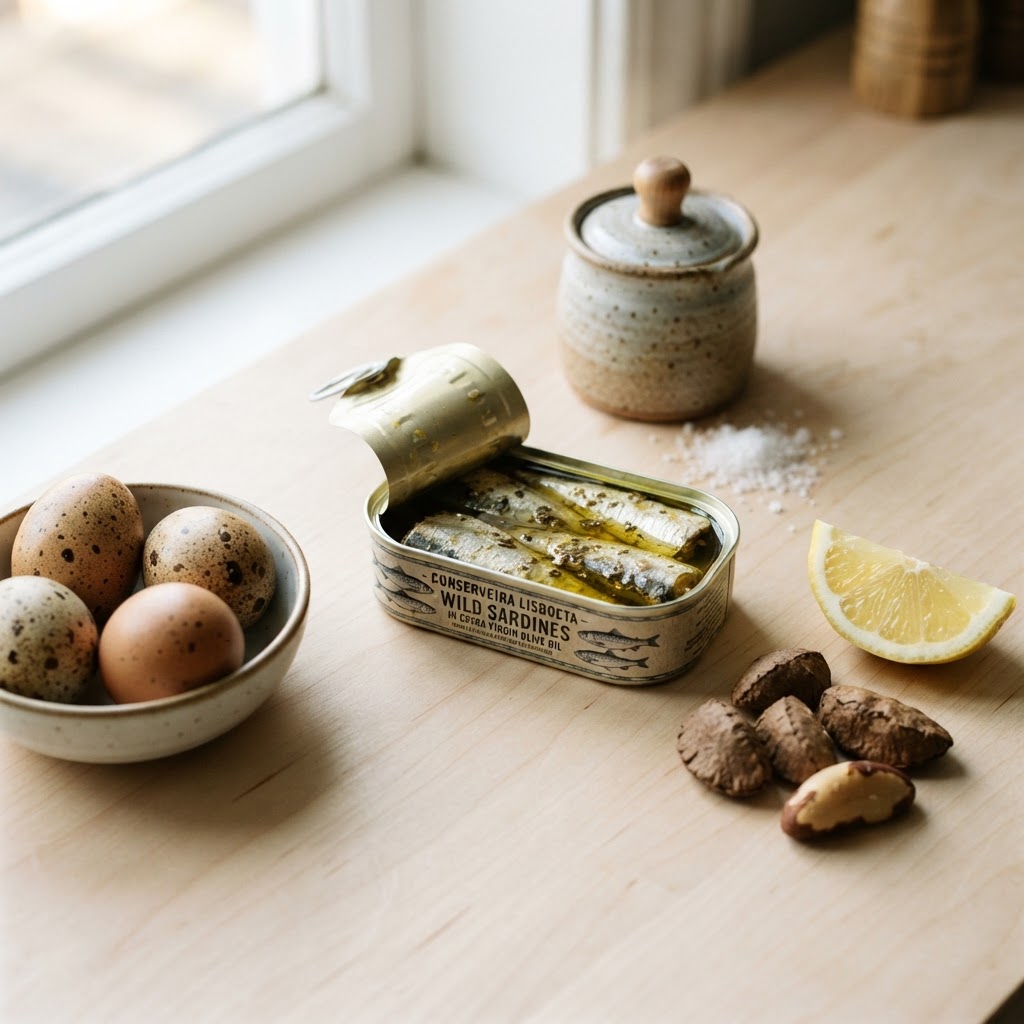
Clinical Nutrition Quick Answer: Postpartum temperature swings, chills, and thyroid symptoms warrant a full thyroid panel (TSH, free T4, free T3, TPO/Tg antibodies) plus serum ferritin and vitamin D with your healthcare provider. Nutritionally, thyroid hormone synthesis and cellular conversion depend heavily on iodine, selenium, iron, zinc, vitamin A, and sufficient daily calories.
| Thyroid & Warmth Cofactor | Physiological Role | Postpartum Whole-Food Sources |
|---|---|---|
| Ferritin (iron stores) | Required for thyroid peroxidase (TPO) enzyme activity | Grass-fed beef, dark poultry, lentils + citrus |
| Selenium & zinc | Convert inactive T4 into active T3 hormone | 1–2 Brazil nuts daily, seafood, pumpkin seeds, eggs |
| Iodine & adequate energy | Raw material for thyroid hormone + milk iodine transfer | Pasture-raised eggs, wild cod, iodized salt, dairy |
You're bundled in a sweater while everyone else in the room is comfortable in a t-shirt. You wake up at 3am for a feeding and your hands are so cold you can barely fumble with the nursing bra clasp. Your partner reaches for your feet in bed and recoils — again. You've Googled "always cold after pregnancy" at least twice this week, probably at 2am with a baby on your chest, and you landed here.
First, I want you to take a breath. What you're experiencing has a name, it has causes, and — this is the part I need you to hear — it is not permanent. Postpartum cold intolerance is one of the most common yet most dismissed symptoms I hear from the mothers I work with, and it is your body sending you a very specific, very decodable signal.
I'm Yarden Konki, and In functional postpartum nutrition practice, I have sat with many postpartum mothers (virtually and in person) who have been told that feeling perpetually freezing after giving birth is "just part of new motherhood." It is not. Or rather — it doesn't have to stay that way. Let's talk about what's actually happening inside your body, why your thyroid is almost certainly involved, and what you can do starting this week.
What's Really Going On: The Science Behind Postpartum Cold Intolerance
Your Body Just Ran an Ultramarathon — and Nobody Refueled You
Pregnancy and birth are metabolically extraordinary events. Your blood volume increases by approximately 45–50% during pregnancy. Your body synthesizes an entirely new organ (the placenta). You grow a human nervous system, skeletal system, and immune system from scratch. And then, in the postpartum period, if you're breastfeeding, your body continues to prioritize your baby's nutritional needs — often at the direct expense of your own.
Feeling cold after giving birth is not a quirk or a personality trait. It is a physiological response to a system that has been running on empty for months.
Here's the core issue: thermoregulation — your body's ability to maintain its core temperature — is metabolically expensive. When your body is depleted of key nutrients and your hormones are fluctuating wildly, temperature regulation is one of the first functions to get deprioritized. Think of it like a hospital on backup power: the ICU stays on, but the gift shop goes dark. Your body will always protect your vital organs first. Feeling warm? That's the gift shop.
The Thyroid Is Your Body's Thermostat
Your thyroid gland, a small butterfly-shaped gland at the base of your throat, is the master regulator of your metabolism — and metabolism is inseparable from heat production. When your thyroid is functioning optimally, it produces hormones (primarily T4, which converts to the active T3) that tell every cell in your body how fast to burn fuel. When thyroid function drops, your metabolic rate slows, less heat is generated, and you feel cold.
Here's where the postpartum period gets particularly complicated:
Postpartum thyroiditis affects an estimated 5–10% of all women after delivery, according to the American Thyroid Association. However, research published in Clinical Endocrinology suggests the true rate may be higher — up to 17% — when subclinical cases are included. This condition typically follows a pattern: a brief hyperthyroid phase (anxiety, heart palpitations, feeling warm) followed by a hypothyroid phase (fatigue, weight retention, brain fog, and yes — constant coldness).
But here's what most conventional medicine misses: you don't have to have clinical postpartum thyroiditis to have thyroid-related cold intolerance. Nutrient depletion alone can impair thyroid hormone production and conversion, leaving your labs looking "normal" while you feel anything but.
The Nutrient Deficiencies Driving Your Cold Sensitivity
This is where my work as a functional postpartum nutritionist becomes critical — because this is the conversation that often never happens at your 6-week checkup.
Iodine: The Building Block of Thyroid Hormones
Your thyroid literally cannot make its hormones without iodine. T4 (thyroxine) contains four iodine molecules. T3 (triiodothyronine) contains three. No iodine, no hormone. It's that simple.
Iodine deficiency is far more common in postpartum women than most people realize, particularly because:
- Iodine transfers into breast milk, prioritizing your baby
- Many prenatal vitamins contain inadequate iodine (some contain none)
- Many women are avoiding iodized salt
The World Health Organization recommends 250 mcg of iodine daily for breastfeeding women, yet studies show that many American breastfeeding mothers consume only 70–150 mcg per day. That gap is significant. A 2019 study in Nutrients found that iodine insufficiency was associated with measurable reductions in thyroid hormone production even when TSH appeared within the normal laboratory range.
Selenium: The Conversion Key
Even if your body has enough iodine to make T4, you still need selenium to convert it to the active T3 form. This conversion happens primarily in your liver and kidneys through an enzyme called deiodinase — and this enzyme is selenium-dependent.
Selenium also plays a critical role in protecting your thyroid tissue from oxidative stress, which is elevated during the postpartum period. A 2019 meta-analysis in Thyroid journal found that selenium supplementation significantly improved thyroid antibody levels in postpartum women with autoimmune thyroid conditions.
Recommended intake for breastfeeding women: 70 mcg/day. Most postpartum women I see are getting less than 40 mcg through food alone. Two to three Brazil nuts daily provides roughly 100–200 mcg — but food sources vary wildly. Many of my clients benefit from a supplemental 100–200 mcg of selenomethionine (the most bioavailable form) under practitioner guidance.
Iron Deficiency: The Overlooked Temperature Thief
Postpartum anemia is extraordinarily common — some estimates suggest up to 50% of women experience iron deficiency in the first several months after birth, particularly after hemorrhage or significant blood loss during delivery.
Here's the temperature connection most people don't make: iron is essential for proper thyroid hormone synthesis and for the oxygen-carrying capacity of red blood cells. Both of these systems directly affect how warm you feel. When your cells aren't getting enough oxygen-rich blood, your extremities — hands, feet, nose — are the first to suffer.
Many mothers experience classic hypothyroid-like signs — cold hands, exhaustion, dry skin, and sluggish digestion — even when standard TSH appears within the lab reference range. When stored iron (ferritin) drops into the single digits or low teens, cellular thermoregulation suffers; functional nutrition practitioners typically look for ferritin closer to 50–70 ng/mL alongside a complete thyroid panel.
Zinc and Vitamin D: Supporting the Full Picture
Zinc is required for the synthesis of thyroid-stimulating hormone (TSH) and plays a role in T3 receptor function. Breastfeeding increases zinc requirements to approximately 12 mg/day, and many postpartum women fall short. Zinc is also heavily concentrated in breast milk, further drawing down maternal stores.
Vitamin D functions more like a hormone than a vitamin, and its receptors are found on thyroid cells. Low vitamin D is associated with higher rates of thyroid autoimmunity. A 2014 study in the Journal of Endocrinological Investigation found that over 69% of women with Hashimoto's thyroiditis (the most common autoimmune thyroid condition, often triggered or worsened postpartum) were deficient in vitamin D. Vitamin D: Do not aim for a universal postpartum blood target of 50–80 ng/mL or start high-dose supplements from this article. NIH considers 20 ng/mL or more sufficient for most people and notes potential adverse effects above 50 ng/mL. The adult upper intake limit, including during breastfeeding, is 4,000 IU daily from food, drinks, and supplements. Discuss testing and any treatment dose with a qualified healthcare professional. NIH vitamin D guidance.
The Hormonal Rollercoaster and Your Body Temperature
The Estrogen-Progesterone Crash
The hormonal cliff that occurs after delivery is dramatic by any measure. Progesterone, which had been produced in large quantities by the placenta, drops to near-zero within hours of birth. Estrogen follows. These aren't small changes — estrogen levels during pregnancy are higher than at any other point in a woman's life and they fall to essentially menopausal levels within days postpartum.
Why does this matter for cold intolerance? Because estrogen plays a direct role in thermoregulation through its action on the hypothalamus — the region of your brain that acts as your body's internal thermometer. This is the same mechanism behind hot flashes in menopause; the inverse — persistent coldness — can occur when estrogen is low. This is particularly relevant if you're exclusively breastfeeding, as prolactin (the breastfeeding hormone) suppresses estrogen production for the duration of nursing.
Adrenal Fatigue and Cortisol Dysregulation
The adrenal glands produce cortisol, your primary stress hormone, and they also produce a small amount of sex hormones. In the sleep-deprived, emotionally intense postpartum period, your adrenal glands are working overtime. Over time, this can lead to HPA-axis dysregulation (often called adrenal fatigue in functional medicine circles) — and this directly suppresses thyroid function through a cascade of feedback loops.
Healing Your Body Temperature: Practical Nutritional Strategies
1. Build a Postpartum-Specific Nutrient Foundation
This means going beyond a standard prenatal vitamin. A functional postpartum nutrition protocol should include:
- Iodine: 150–250 mcg daily from whole food sources (seaweed, wild-caught fish, dairy) or a postpartum-specific supplement
- Selenium: 100–200 mcg daily (selenomethionine form)
- Iron (with cofactors): Ferrous bisglycinate is the most gentle and absorbable form; pair with vitamin C and avoid taking with calcium
- Zinc: 15–25 mg daily in bisglycinate or picolinate form
- Vitamin D supplements: A qualified healthcare professional should decide whether testing or supplementation is needed and select a dose for your circumstances. The adult upper intake limit, including during breastfeeding, is 4,000 IU daily from food, drinks, and supplements; higher treatment doses require medical supervision. NIH vitamin D guidance.
- B12 and Folate: Critical for energy production and red blood cell formation
- Omega-3 fatty acids: 2–3 grams EPA+DHA daily to reduce inflammation and support hormone synthesis
2. Prioritize Thyroid-Nourishing Foods
Food is your most consistent daily lever. Build meals around:
- Mineral-rich proteins: Grass-fed beef, lamb, oysters, sardines, liver (1–2 servings per week is genuinely a superfood for postpartum recovery)
- Root vegetables and complex carbohydrates: Don't fear carbs postpartum — adequate carbohydrate intake supports T4-to-T3 conversion and cortisol regulation
- Bone broth: Rich in minerals, gelatin, and glycine, which supports liver detoxification (necessary for hormone clearance)
- Cooked leafy greens: Raw cruciferous vegetables in very large amounts can theoretically interfere with thyroid function (goitrogens), but cooked in moderate amounts, they're fine and nutritious
3. Support Your Circadian Rhythm (Even With a Newborn)
Thyroid hormone secretion follows a circadian pattern. Sleep deprivation — chronic and profound in new motherhood — directly suppresses thyroid function. I know you can't just "sleep more" with a newborn. But you can:
- Get morning light exposure within 30 minutes of waking (even 5 minutes outside)
- Dim lights after 8pm
- Avoid screens for 30 minutes before sleep
- Sleep when the baby sleeps, without guilt, even once per day
These small anchors protect your circadian rhythm and help normalize hormone secretion patterns.
When to See a Specialist: This Is Not the Time to Wait and See
Please pursue testing if you have any combination of the following:
- Cold intolerance persisting beyond 6 weeks postpartum
- Unexplained weight retention despite reasonable diet
- Hair loss beyond typical postpartum shedding (after 4 months)
- Severe fatigue disproportionate to sleep deprivation
- Brain fog, depression, or anxiety that is worsening
- Dry skin, brittle nails, constipation
- Heart palpitations or feeling unusually warm (hyperthyroid phase)
Request the following labs from your provider — and don't accept "your thyroid is fine" without seeing these specific values:
- TSH (ideally between 1–2 mIU/L functionally, not just "within range")
- Free T3 and Free T4 (not just total T3/T4)
- Thyroid Peroxidase Antibodies (TPO-Ab) — to rule out Hashimoto's
- Ferritin (target 50–70+ ng/mL)
- Serum B12, Vitamin D (25-OH)
- Comprehensive metabolic panel including zinc
Advocate for yourself. If a provider dismisses your symptoms without running these labs, you are entitled to seek a second opinion. Your quality of life in this season matters enormously — not just for you, but for your baby.
Your Postpartum Cold Intolerance Action Plan
Here's where to start this week — no overwhelm, just momentum:
Day 1–3:
- Schedule a blood draw with your OB or midwife; request the full panel listed above
- Add 2 Brazil nuts daily (selenium)
- Begin a high-quality omega-3 supplement if you aren't already
Week 1:
- Evaluate your prenatal/postnatal vitamin for iodine content — switch if it contains less than 150 mcg
- Add liver or sardines to your rotation twice this week (I have recipes — more on that below)
- Get outside for 10 minutes of morning sunlight every day
Week 2–4:
- Review lab results with a practitioner who understands functional ranges
- Consider targeted supplementation based on results
- Begin tracking your basal body temperature (first thing in the morning, before getting up) — below 97.8°F consistently is a functional medicine flag for low thyroid output
If feeling cold is paired with diffuse thinning at the crown or outer eyebrows, reviewing the differences between normal postpartum shedding and thyroid-related hair loss can help prepare questions for your provider.
You Are Not Meant to Feel Like This Forever
I want to close with something I say to almost every new client in our first session: Your body is not broken. It is depleted. There is a profound difference.
The cold hands, the frozen feet, the inability to get warm — these are messages. They are your body's way of asking, with great patience, for the nourishment it gave away. Pregnancy and birth are acts of extraordinary generosity, and the postpartum period is your body asking to receive.
The research is clear, the tools exist, and you deserve a practitioner who takes your symptoms seriously enough to actually investigate them. Whether that's through targeted nutrition, functional lab testing, or a comprehensive postpartum recovery protocol — there is a path forward, and it doesn't require you to simply endure this.
Ready to stop guessing and start understanding what your body is actually asking for?
I offer free 30-minute discovery calls for postpartum mothers who are ready to dig into the root causes of their depletion — thyroid health, nutrient deficiencies, hormone recovery, and more. In our call, we'll talk through your symptoms, your history, and whether working together is the right fit.
Book your free discovery call → (No pressure, no pitch — just a real conversation about how to help you feel like yourself again.)
Clinical Evidence & Maternal Nutrition References
- NIH Office of Dietary Supplements (ODS): Fact sheets for health professionals on Iron, Vitamin B12, Vitamin D, Iodine, Choline, Magnesium, and Omega-3 Fatty Acids during pregnancy and lactation.
- Centers for Disease Control and Prevention (CDC): Maternal Diet and Micronutrient Considerations for Breastfeeding Mothers (iron, B12, iodine, and vitamin D guidance).
- American College of Obstetricians and Gynecologists (ACOG): Committee Opinion No. 736 — Optimizing Postpartum Care (ongoing fourth-trimester and longitudinal maternal follow-up).